Introduction
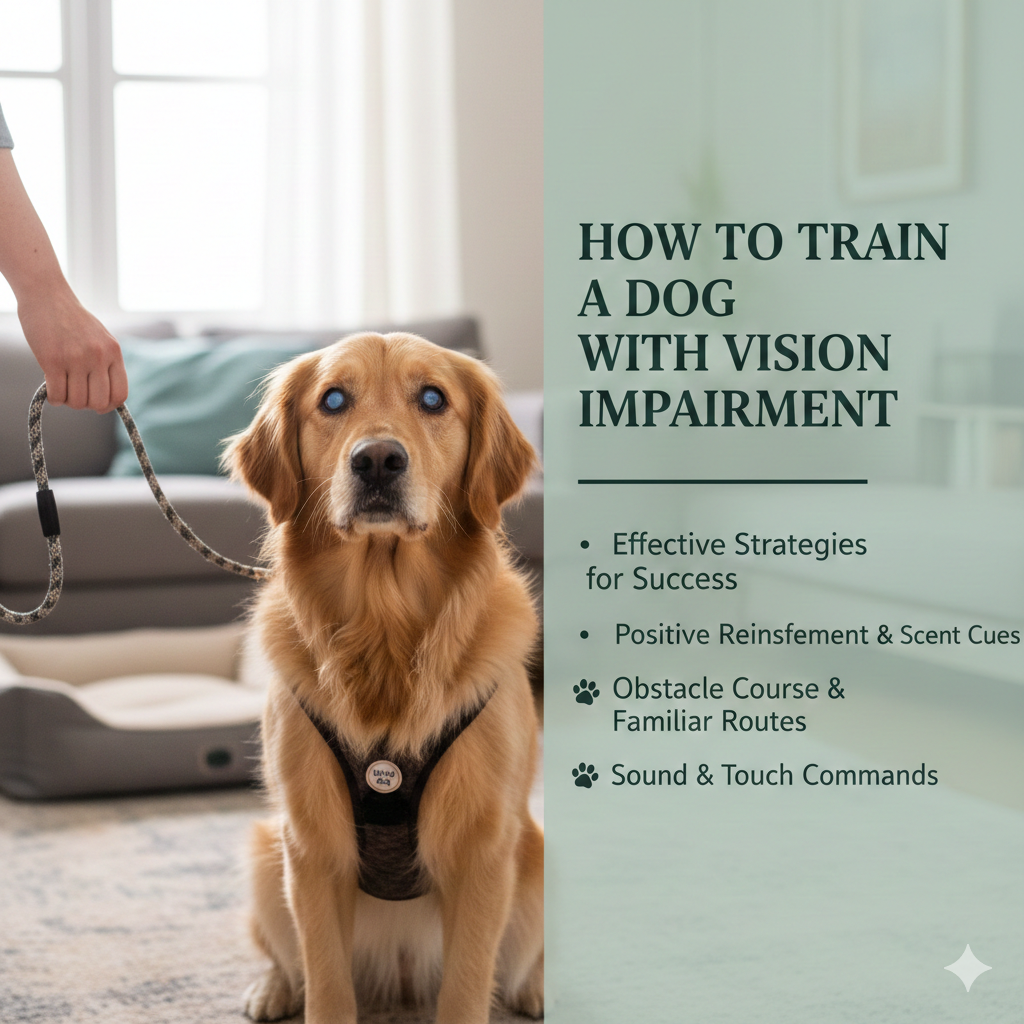
Training a dog with vision impairment presents unique challenges, but with the right strategies, it’s completely achievable. Dogs rely on their senses to interact with the world, and while vision is important, blind or visually impaired dogs can still live happy, fulfilling lives with the proper training and support. In this post, we’ll cover practical techniques for training dogs with vision impairments, how to adapt your training methods, and how to create a safe and enriching environment for your dog. Whether your dog has lost their sight over time or was born with vision impairment, these training tips can help you communicate and bond more effectively.
Understanding Vision Impairment in Dogs Training Blind Dogs:
A dog with vision impairment may have partial or total blindness. Vision problems can be caused by various factors, including genetics, injury, disease, or aging. The most common conditions that lead to vision impairment in dogs include:
Cataracts: Clouding of the eye lens, leading to partial or complete blindness.
Glaucoma: Increased pressure within the eye, often causing pain and vision loss.
Retinal Diseases: Conditions like progressive retinal atrophy (PRA) that cause gradual loss of vision.
Age-Related Degeneration: Older dogs may experience diminished eyesight due to natural aging.
Vision impairment in dogs doesn’t mean they can’t live a fulfilling life, but it does require adaptations in how they interact with their environment and how they’re trained.
Training Techniques for Dogs with Vision Impairment
Training a dog with vision impairment involves utilizing other senses—such as hearing and touch—while minimizing reliance on visual cues. Here are some effective training strategies for blind and visually impaired dogs:
1. Use of Verbal Cues
Dogs with vision impairment rely heavily on their sense of hearing, so verbal commands become a primary form of communication. Focus on clear, distinct verbal cues that your dog can associate with specific behaviors.
How to Use: Choose consistent, simple words like “sit,” “stay,” “come,” and “down.” Be sure to use the same tone and inflection every time, as dogs respond better to tone than to specific words.
Why It Works: Dogs with vision impairment often rely on sound to navigate their environment. Verbal cues help them understand commands and routines.
2. Incorporating Tactile Cues
Tactile cues involve touch-based communication. This method is incredibly effective for visually impaired dogs, especially if they need assistance learning basic commands like sit or lie down.
How to Use: You can use your hand or a gentle touch to guide your dog’s movements. For example, gently press your dog’s back to help them understand “sit,” or lightly tap their side to indicate “lie down.”
Why It Works: Touch is a powerful form of communication for dogs. It helps them understand spatial positioning and encourages positive behavior without overwhelming them.
3. Use of Sound-Based Training Tools
If your dog has lost their sight, they likely rely more on their hearing. Using sound-based training tools can help get your dog’s attention and reinforce commands.
How to Use: Clickers, vibrating collars, or even sounds from toys can help capture your dog’s attention. A vibrating collar, for example, can provide a tactile cue that alerts your dog to a particular command or situation.
Why It Works: Sound-based cues allow you to guide and communicate with your dog, giving them important feedback during training. Vibrating collars can also provide non-invasive communication, especially in situations where verbal cues may not be enough.
4. Scent and Food-Based Training
Dogs have an incredible sense of smell, which can be utilized in training. Scent-based cues or using food as a lure can help reinforce certain behaviors and help guide your dog in their training.
How to Use: Use food as a reward to guide your dog into specific positions. For example, use a treat to lead your dog into the “sit” position, allowing them to smell and follow the scent to guide their body into the correct posture.
Why It Works: Scent-based training engages your dog’s natural abilities and provides a more intuitive form of guidance. The use of food as a reward is highly motivating for most dogs.
5. Environment-Based Training
Making your home environment safe and predictable is essential for training a visually impaired dog. You can train your dog to navigate their surroundings using both sound and tactile cues, which helps build confidence and independence.
How to Use: Place rugs or mats in areas where your dog should go (such as near their food bowl or bed). Use consistent sounds or smells to help them identify specific locations. For example, a mat near the door could signal that it’s time for a walk, or a sound near their crate could indicate it’s bedtime.
Why It Works: Consistent environmental cues help your dog understand their surroundings, reducing anxiety and improving their ability to navigate your home.
Common Mistakes to Avoid When Training a Blind Dog
Training a blind or visually impaired dog requires patience and consistency. Here are some common mistakes to avoid:
Relying Too Much on Visual Cues: Deaf or blind dogs cannot rely on visual cues, so relying solely on hand signals or visual commands will hinder their learning. Use tactile, auditory, and environmental cues instead.
Overwhelming Your Dog: Blind dogs may feel overwhelmed by too much stimulation or rapid changes in their routine. Take things slowly and introduce new training elements gradually.
Not Creating a Safe Environment: If your home isn’t organized in a way that makes sense for a blind dog, they may get confused or hurt. Ensure furniture is in predictable places and avoid clutter that could pose a risk.
Ignoring Positive Reinforcement: Always reinforce the behavior you want to see. If you neglect to reward good behavior, your dog might not understand that they’ve done something right.
Information Gain: The Role of Confidence Building in Blind Dogs
A major part of training blind dogs is building their confidence. Dogs with vision impairment may feel vulnerable or scared in unfamiliar environments. Confidence-building training helps dogs navigate their world safely and with assurance. Start with simple exercises and gradually increase difficulty as your dog becomes more comfortable. Positive reinforcement, along with creating predictable environments, helps dogs feel secure and confident. Over time, your dog will build the confidence needed to face new challenges without fear.

Unique Section: Practical Insight – How Training My Blind Dog Changed Our Lives
When I adopted my blind dog, Max, I quickly realized how much he depended on his other senses. I started by using touch cues and simple verbal commands to help him navigate our home. At first, I was concerned that he might feel lost or anxious, but over time, he learned to respond to my voice and touch, and we built a strong bond based on trust. We also adapted our house to make it easier for him to find his food bowl, his favorite spots, and even the door for walks. Training Max helped him feel more secure, and now he’s a confident and happy dog, thriving despite his blindness.
FAQ Section
How do I train my blind dog to come when called?
Start by using a consistent verbal cue, such as a simple word like “come,” and reward your dog with treats or praise when they reach you. You can also use a sound, like tapping or clapping, to help get their attention.
Can blind dogs be trained to walk on a leash?
Yes, blind dogs can absolutely be trained to walk on a leash. Start by guiding them with a gentle tug and clear verbal cues, and always be patient as they learn to navigate different environments.
Can blind dogs live a normal, happy life?
Yes! Blind dogs can live full, happy lives with the right training, adaptations, and lots of love. They rely on their other senses and can develop strong bonds with their owners.
What are the best toys for blind dogs?
Toys with different textures, scents, or sounds are great for blind dogs. For example, squeaky toys or toys that make noise when chewed can help them engage in play and stimulate their senses.
How can I create a safe environment for my blind dog?
Keep furniture in consistent positions, use rugs or mats to guide your dog, and avoid clutter. Consider using baby gates to block off areas that might be hazardous.
Conclusion
Training a dog with vision impairment is a rewarding experience that requires patience, creativity, and positive reinforcement. By using verbal cues, tactile signals, and environmental adaptations, you can help your blind dog navigate the world with confidence. Remember that every dog learns at their own pace, so take your time, be consistent, and always focus on building trust and positive experiences. With the right approach, your blind dog can lead a fulfilling, happy life and be an active, engaged member of your family.
Internal Linking Suggestions
Related Post: How to Train a Deaf Dog: Tips for Effective Communication and Learning
External Authority Links
American Kennel Club – Training Blind Dogs (akc.org)
PetMD – Blind Dog Training Tips (petmd.com)